Many artists experience creative blocks at some point.
They sit down to create…
…and suddenly:
- ideas disappear,
- motivation drops,
- inspiration feels distant,
- or everything feels emotionally heavy.
This often creates frustration because artists assume:
“Maybe I’m losing creativity.”
But creative blocks are not always caused by lack of talent.
Sometimes the real blockage is emotional.
Creativity Is Deeply Connected to Emotional State
Artists do not create only with their hands.
They create through:
- emotions,
- imagination,
- focus,
- confidence,
- and mental energy.
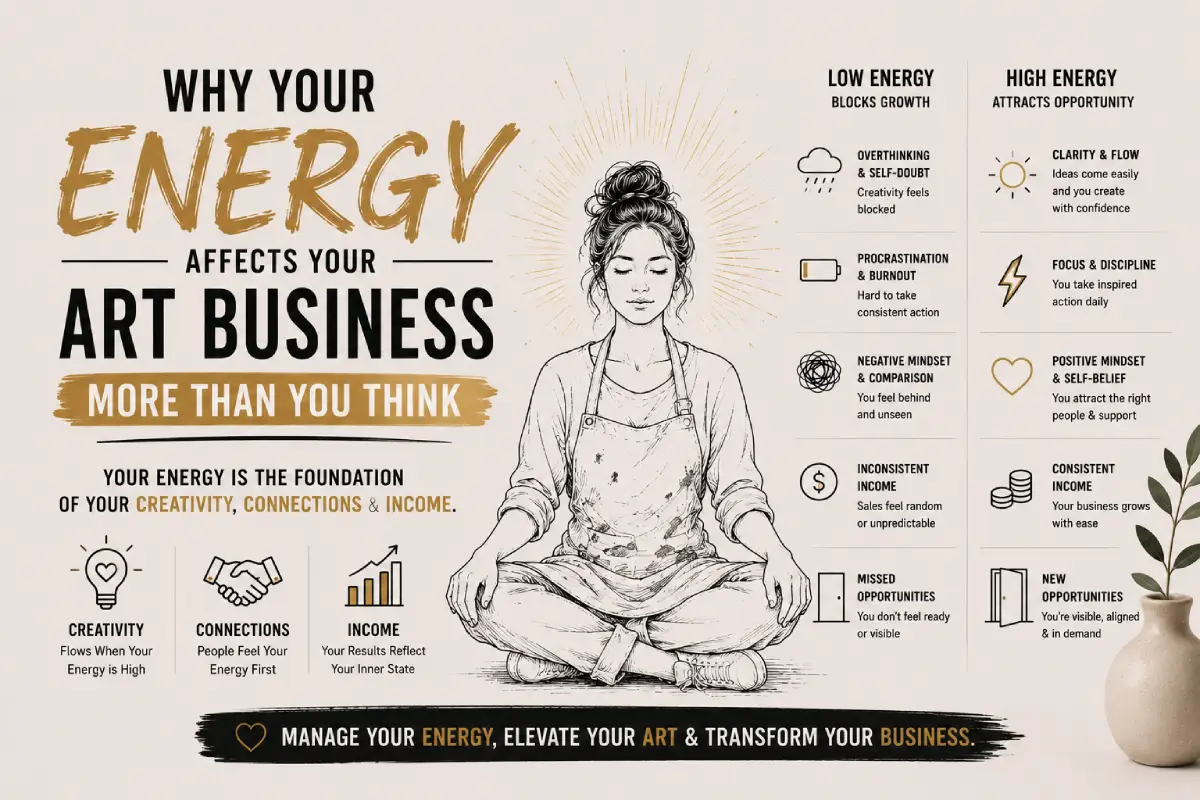
Which means emotional overwhelm affects creativity heavily.
For example:
- anxiety affects focus,
- perfectionism affects flow,
- fear affects expression,
- and burnout affects inspiration.
This is why emotional healing practices sometimes help creativity return naturally.
Many Creative Blocks Are Fear-Based
Artists often believe:
“I need more inspiration.”
But underneath creative blocks, there is frequently:
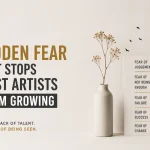
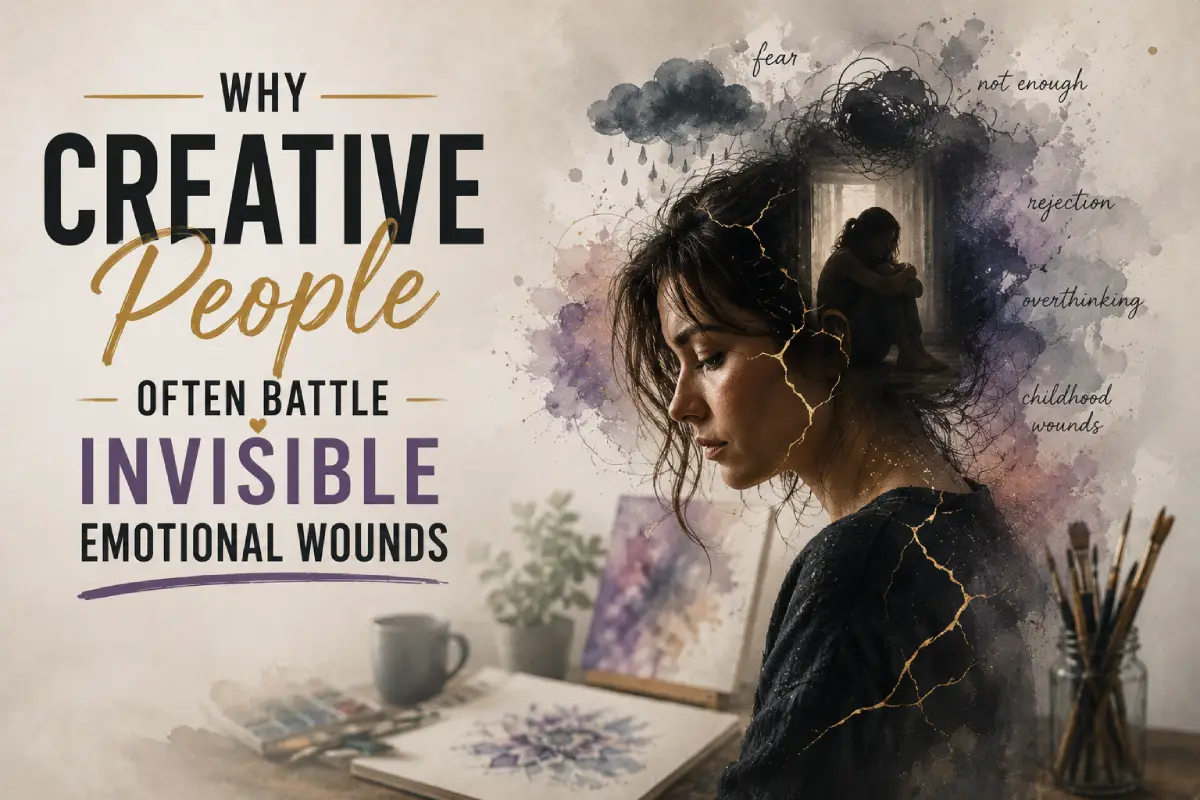
- fear of failure,
- fear of judgment,
- fear of imperfection,
- or emotional exhaustion.
For example:
An artist may delay creating because subconsciously they fear:
- disappointing themselves,
- receiving criticism,
- or not meeting expectations.
This creates mental resistance.
A Realistic Example
Ritika from Pune loved creating mandalas.
But after beginning online workshops, she started feeling intense pressure to:
- perform well,
- create perfect content,
- and constantly impress people.
Slowly:
- creativity started feeling stressful,
- inspiration reduced,
- and overthinking increased.
She later realized:
the issue was not lack of creativity.
It was emotional pressure and perfectionism.
Once she focused on relaxation and emotional balance, creative flow gradually returned.
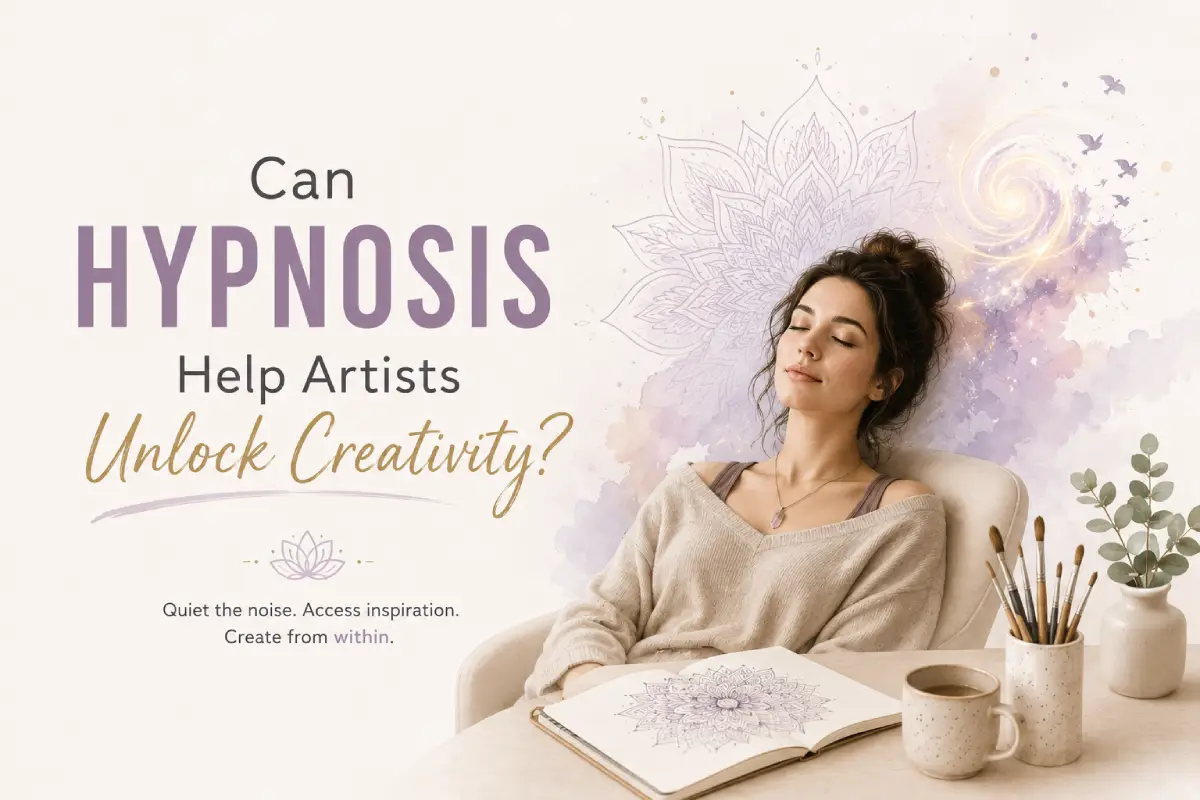
What Is Hypnosis Really?
Many people misunderstand hypnosis because of movies and entertainment.
In reality, hypnosis is usually:
- a calm,
- focused,
- deeply relaxed mental state.
It is not:
- losing control,
- unconsciousness,
- or mind manipulation.
During relaxed states, the subconscious mind becomes more open to:
- emotional processing,
- calming patterns,
- visualization,
- and positive mental conditioning.
Why Relaxation Helps Creativity
Creative flow often appears when the nervous system feels safe and relaxed.
Think about when ideas come naturally:
- during walks,
- showers,
- quiet moments,
- or peaceful states.
Not usually during intense stress.
This is because stress activates mental survival patterns, while relaxation supports imagination and openness.
Another Example
An embroidery artist from Bangalore struggled with constant overthinking while creating.
She kept:
- restarting projects,
- criticizing mistakes,
- and feeling emotionally frustrated.
Eventually she began practicing:
- guided relaxation,
- calming visualization,
- and subconscious confidence exercises.
Slowly:
- perfectionism reduced,
- creativity felt lighter,
- and she enjoyed creating again.
Visualization Can Help Creative Confidence
Many athletes, performers, and speakers use visualization techniques regularly.
Artists can benefit similarly.
For example:
before starting a project, artists can mentally rehearse:
- calm focus,
- enjoyment,
- confidence,
- and creative flow.
This reduces emotional tension gradually.
Why Emotional Safety Matters for Creativity
The nervous system strongly affects artistic expression.
When artists constantly feel:
- stressed,
- emotionally pressured,
- fearful,
- or self-critical,
creative flow decreases.
But when emotional safety increases:
- ideas feel lighter,
- experimentation becomes easier,
- and inspiration returns more naturally.
Creative Blocks Are Often Emotional Protection
Sometimes the mind blocks creativity because:
- exhaustion,
- fear,
- or emotional overload
has become too intense.
In these situations, forcing productivity often worsens frustration.
Emotional restoration becomes more important than pressure.
Hypnosis Is Not Magic
This is important to understand clearly.
Hypnosis is not an instant miracle solution.
It does not suddenly make someone:
- talented,
- fearless,
- or endlessly inspired.
But relaxation-based subconscious work may help artists:
- reduce emotional resistance,
- calm overthinking,
- improve confidence,
- and reconnect with creative flow.
Why Many Artists Need Inner Calm More Than Motivation
Artists often search constantly for:
- motivation,
- inspiration,
- or discipline.
But many actually need:
- emotional calm,
- nervous system balance,
- and reduced self-pressure.
Because creativity naturally flows better when the mind feels less emotionally threatened.
What Artists Can Practice
1. Reduce Pressure While Creating
Not every artwork must become perfect.
2. Practice Relaxation
Calmness supports creativity.
3. Stop Over-Attacking Yourself
Harsh self-criticism blocks flow.
4. Allow Imperfect Creativity
Expression matters more than perfection.
5. Create Emotional Breathing Space
Rest supports inspiration.
The Truth Most Artists Need to Hear
Creative blocks do not always mean:
- you are untalented,
- lazy,
- or failing.
Sometimes your mind simply feels:
- emotionally overloaded,
- unsafe,
- or exhausted.
And often, creativity returns not through force…
but through emotional healing, relaxation, and inner calm.
Because when the mind becomes quieter…
creativity often finds its way back naturally.