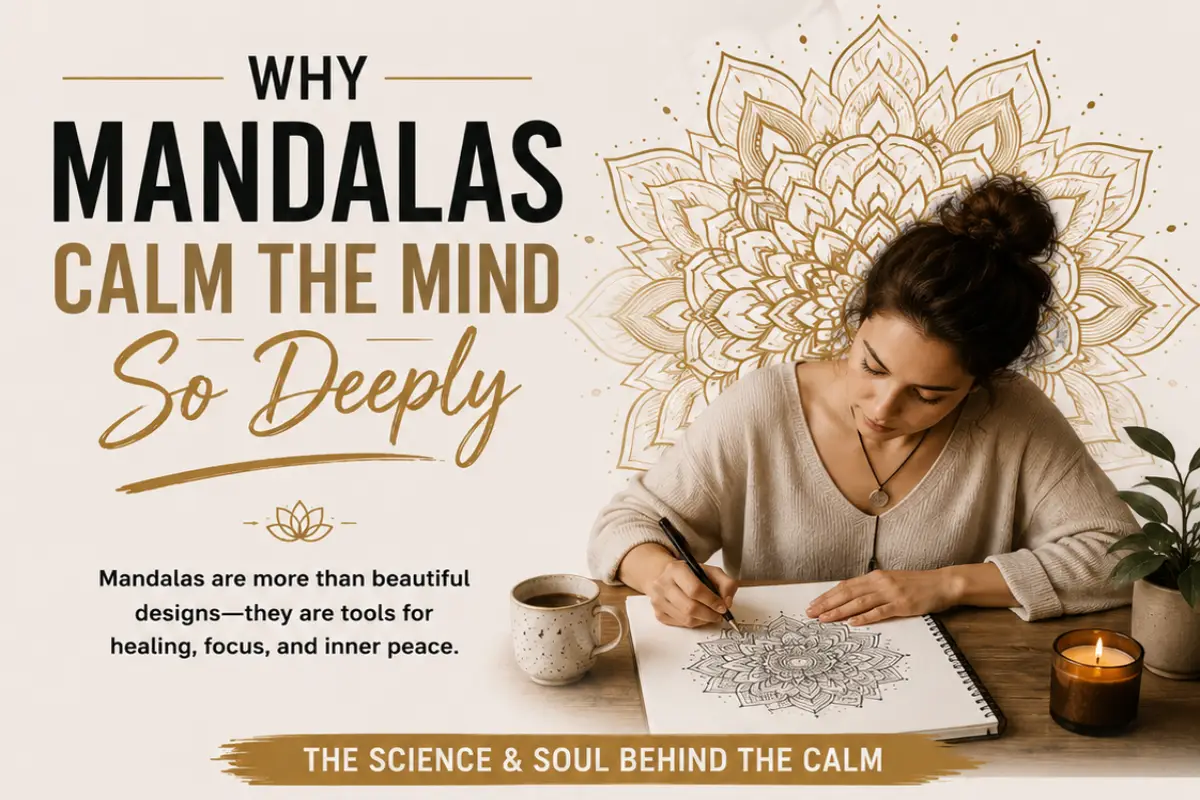
There is something strangely calming about creating mandalas.
Dot by dot.
Pattern by pattern.
Layer by layer.
The outside world slowly becomes quieter.
The mind feels less chaotic.
And for a little while, many people experience something they have not felt in days:
peace.
This is one reason mandala art has emotionally connected with so many people across the world.
Especially today, when:
- stress,
- overthinking,
- emotional burnout,
- and mental exhaustion
have become extremely common.
But why exactly do mandalas feel so calming?
The answer is deeper than most people realize.
Mandalas Naturally Slow the Mind
Modern life constantly overstimulates the brain.
People move quickly between:
- phones,
- notifications,
- responsibilities,
- work pressure,
- and emotional stress.
The nervous system rarely gets rest.
Mandalas create the opposite experience.
When someone begins creating repetitive patterns, the mind naturally shifts into:
- focus,
- rhythm,
- observation,
- and presence.
This slows mental noise gradually.
Repetition Creates Emotional Calm
One reason mandalas feel therapeutic is repetition.
Repetitive creative movements often help regulate emotional overwhelm.
For example:
- drawing dots,
- repeating patterns,
- tracing symmetry,
- or layering details
creates mental rhythm.
And rhythm often calms the nervous system.
This is why many people describe mandala creation as:
- meditative,
- grounding,
- peaceful,
- or emotionally soothing.
A Realistic Example
Lakshmi from Bangalore started learning dot mandala art during a stressful period in her life.
She was balancing:
- work pressure,
- family responsibilities,
- and emotional exhaustion.
Initially she joined a mandala class simply as a hobby.
But slowly she noticed something unexpected.
While painting:
- her breathing slowed,
- overthinking reduced,
- and her mind felt calmer.
She later shared:
“For those two hours, my brain finally became quiet.”
This experience is incredibly common among mandala artists.
Why Symmetry Feels Emotionally Satisfying
Human beings naturally respond positively to:
- balance,
- harmony,
- and symmetry.
Mandalas visually create:
- structure,
- order,
- and completeness.
For minds feeling emotionally chaotic, this sense of structure can feel deeply comforting.
Especially for people experiencing:
- anxiety,
- emotional overwhelm,
- or mental restlessness.
Mandalas Encourage Present-Moment Awareness
Most emotional stress comes from:
- worrying about the future,
or
- replaying the past.
But mandala work demands attention to the present moment.
Artists must focus on:
- spacing,
- pressure,
- colors,
- patterns,
- and alignment.
This gently pulls attention away from emotional overthinking.
In many ways, mandalas naturally encourage mindfulness.
Another Example
A homemaker from Chennai began creating mandalas after her children moved away for college.
She often felt:
- lonely,
- emotionally low,
- and mentally restless.
Initially she struggled with focus.
But slowly the repetitive process of mandala creation became emotionally comforting.
Over time:
- her concentration improved,
- stress reduced,
- and she even began teaching beginners locally.
For her, mandalas became more than art.
They became emotional healing.
Creativity Creates Emotional Release
Many people suppress emotions silently.
They struggle expressing:
- sadness,
- fear,
- frustration,
- or emotional pressure.
Creative activities often become safe emotional outlets.
This is why people sometimes:
- cry while painting,
- feel emotional while creating,
- or experience deep calm afterward.
Art gives emotions movement.
Mandalas Create a Sense of Completion
Modern life often feels mentally unfinished.
There are always:
- pending tasks,
- responsibilities,
- and emotional pressure.
But completing a mandala creates psychological satisfaction.
The brain experiences:
- closure,
- progress,
- and completion.
This can feel emotionally stabilizing.
Why Mandalas Help With Focus
Many artists notice that mandala work improves:
- concentration,
- patience,
- and attention span.
Because creating detailed patterns requires:
- observation,
- precision,
- and steady focus.
This focused attention naturally reduces mental distraction.
Mandalas and Emotional Healing
While mandalas are not a replacement for professional mental health support, they can absolutely support emotional well-being.
Many people experience:
- relaxation,
- emotional release,
- reduced stress,
- and improved emotional balance through creative practice.
Especially when combined with:
- slow breathing,
- calming music,
- or mindful creation.
Why So Many Women Emotionally Connect With Mandalas
Many women in India silently carry emotional pressure from:
- responsibilities,
- caregiving,
- expectations,
- and emotional labor.
Creative spaces often become rare moments of:
- stillness,
- self-expression,
- and personal identity.
This is one reason mandala communities often feel emotionally supportive.
The Importance of Slowing Down
Mandalas quietly teach patience.
Unlike fast digital consumption, mandala art requires:
- presence,
- slowing down,
- and attention.
And perhaps this is exactly why so many people feel emotionally calmer afterward.
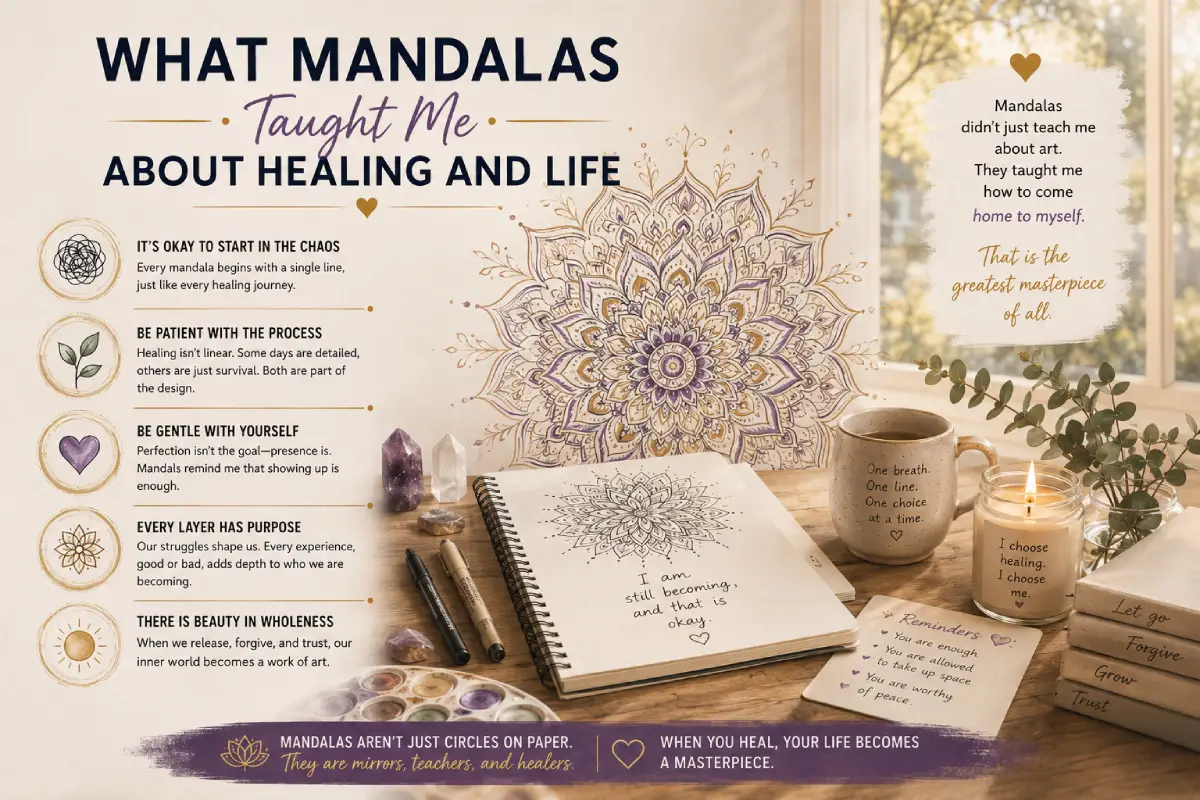
What Mandalas Teach Beyond Art
Mandalas often teach:
- patience,
- balance,
- emotional focus,
- discipline,
- and stillness.
The process itself becomes healing.
Not just the final artwork.
The Truth Most People Ignore
Mandalas are not only decorative art forms.
For many people, they become:
- emotional anchors,
- mindful practices,
- healing rituals,
- and spaces of inner calm.
Because sometimes the mind does not need:
- more noise,
- more pressure,
- or more stimulation.
Sometimes it simply needs:
- rhythm,
- quietness,
- and gentle focus.
And that is exactly what mandalas often provide.