Most artists do not realize this…
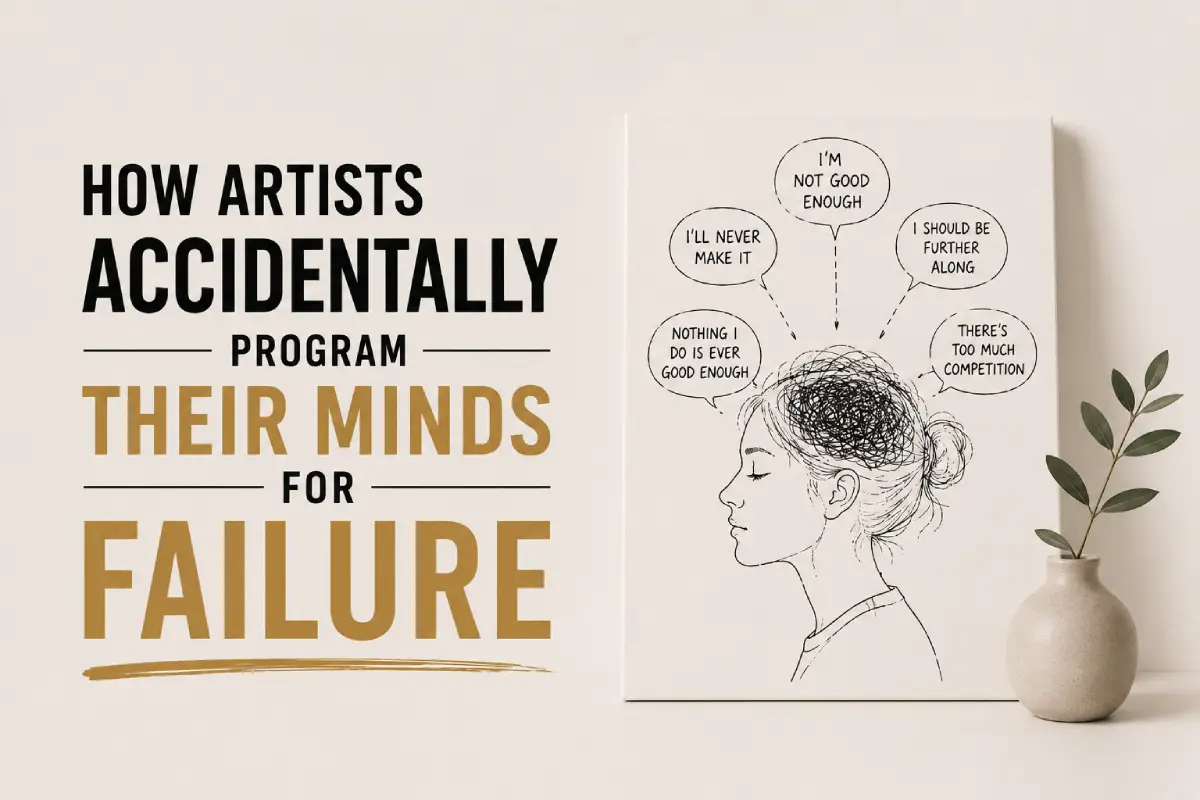
The words they repeatedly tell themselves slowly become instructions for the mind.
Thoughts like:
- “I’m not good enough.”
- “Nobody will buy my work.”
- “There are already too many artists.”
- “I’m bad on camera.”
- “I’ll probably fail anyway.”
may feel harmless initially.
But when repeated consistently, the brain begins accepting them as truth.
And once the subconscious mind accepts something as true, behavior quietly changes to match it.
This is one of the biggest hidden reasons many talented artists stay stuck emotionally and financially.
The Brain Learns Through Repetition
The human mind constantly absorbs repeated patterns.
Whether positive or negative.
For example:
If an artist repeatedly thinks:
“I’m awkward on social media,”
the brain starts searching for proof.
So when:
- a reel gets low views,
- someone ignores content,
- or speaking feels uncomfortable,
the mind says:
“See? I knew it.”
This reinforces the belief further.
Over time:
- confidence drops,
- visibility decreases,
- and self-doubt increases.
The artist unknowingly creates a self-fulfilling cycle.
What Is NLP?
NLP stands for Neuro Linguistic Programming.
It studies how:
- thoughts,
- language,
- emotions,
- and behavior
influence human experience.
In simple terms:
the way people speak internally affects how they feel and act externally.
Artists often underestimate how much their internal language shapes:
- confidence,
- creativity,
- consistency,
- and business growth.
A Common Example Many Artists Relate To
Take the example of Pooja from Bangalore.
Pooja creates beautiful embroidery art.
But every time she planned to post content online, her mind repeated:
- “People won’t care.”
- “My videos look stupid.”
- “Other artists are much better.”
Because of these thoughts:
- she delayed posting,
- over-edited content,
- deleted reels,
- and avoided showing her face.
As a result:
her audience growth remained extremely slow.
The problem was not talent.
The problem was mental programming.
Negative Self-Talk Quietly Shapes Behavior
Artists often think:
“It’s just a thought.”
But repeated thoughts influence:
- body language,
- emotional state,
- motivation,
- energy,
- and decisions.
For example:
An artist who constantly thinks:
“Nobody buys handmade art anymore,”
may unconsciously:
- avoid promoting properly,
- underprice work,
- hesitate during sales conversations,
- or stop posting consistently.
Eventually poor results appear.
Then the mind says:
“See? I was right.”
Why Artists Are Especially Vulnerable
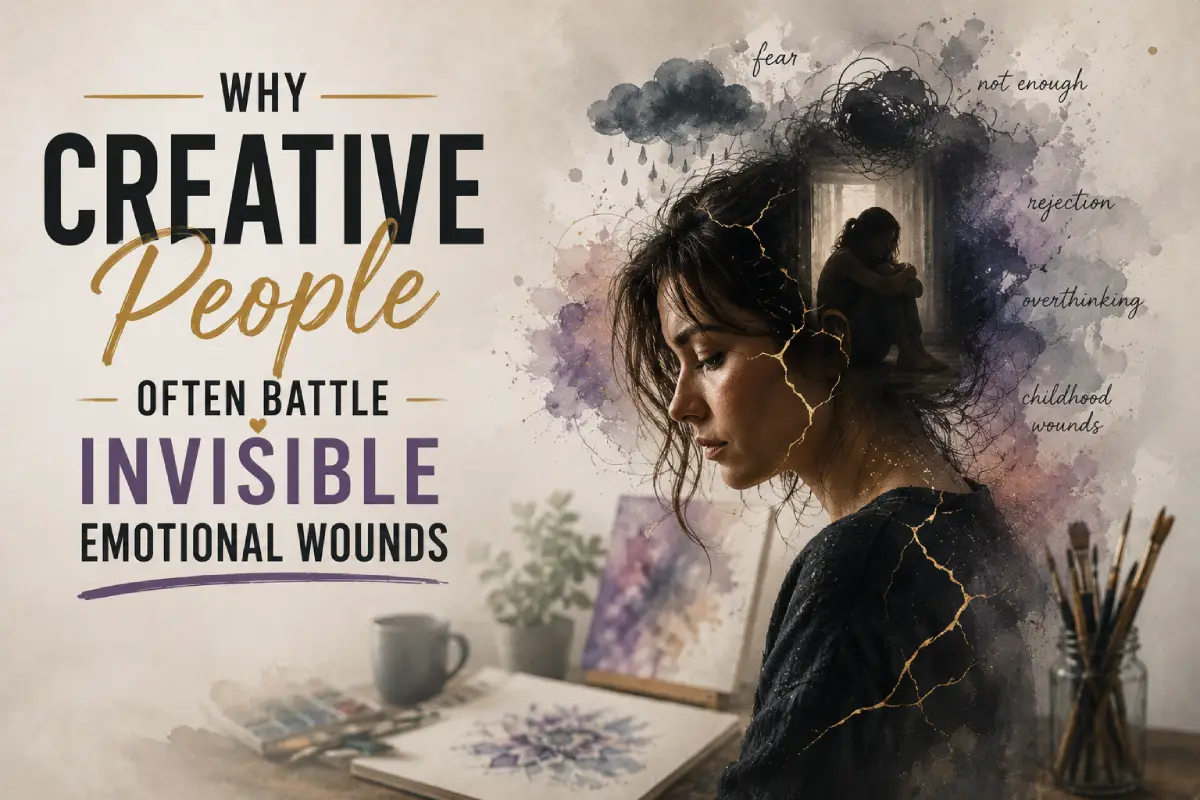
Creative people are often emotionally sensitive and highly reflective.
This makes them:
- imaginative,
- emotionally expressive,
- and intuitive.
But it also means negative thoughts can affect them deeply.
Artists tend to:
- overthink,
- compare,
- internalize criticism,
- and emotionally replay failures.
Without awareness, these patterns become subconscious habits.
Childhood Conditioning Matters More Than People Realize
Many Indian artists grow up hearing:
- “Art is just a hobby.”
- “Creative careers are unstable.”
- “Focus on something practical.”
- “Very few people succeed in art.”
Even if said casually, these messages influence subconscious beliefs.
Later in life, artists may consciously want success…
while subconsciously believing:
“This may never become stable.”
This creates inner conflict.
Another Realistic Example
Neha from Hyderabad loved mandala art and wanted to teach online workshops.
But whenever she thought about charging properly, an uncomfortable feeling appeared.
Deep inside, she believed:
“People won’t pay much for art classes.”
This belief came from years of hearing:
- “Art is not a serious career.”
So even though students appreciated her teaching, she:
- undercharged,
- overworked,
- and felt financially frustrated.
Once she became aware of this mental pattern, she slowly started changing:
- her internal language,
- pricing confidence,
- and self-perception.
Her business improved gradually.
The Mind Believes Emotionally Charged Repetition
The subconscious mind learns strongly through:
- repetition,
- emotional intensity,
- and imagination.
This is why constantly replaying:
- embarrassment,
- failure,
- rejection,
- or criticism
creates emotional conditioning.
Artists who repeatedly focus on:
- low engagement,
- mistakes,
- or comparison
accidentally strengthen insecurity.
Why Many Artists Fear Visibility
A large number of artists secretly associate visibility with:
- judgment,
- embarrassment,
- rejection,
- or criticism.
So even when they want growth consciously…
their subconscious mind tries to avoid exposure.
This appears as:
- procrastination,
- inconsistency,
- perfectionism,
- or overthinking.
The Importance of Internal Language
Small language shifts create powerful emotional changes.
For example:
Instead of:
“Nobody will buy.”
Try:
“I am learning how to communicate value better.”
Instead of:
“I’m terrible on camera.”
Try:
“I’m becoming more confident with practice.”
This is not fake positivity.
It is healthier mental conditioning.
Why Self-Image Matters
People behave according to how they see themselves internally.
If an artist subconsciously sees herself as:
- small,
- invisible,
- or incapable,
her actions reflect that identity.
But when artists begin seeing themselves as:
- creators,
- educators,
- professionals,
- and business owners,
confidence shifts naturally.
Practical Mental Shifts Artists Need
1. Observe Internal Language
Notice repetitive negative thoughts.
2. Reduce Emotional Self-Attacks
Harsh self-criticism weakens confidence.
3. Reframe Mistakes
Mistakes are learning experiences, not identity.
4. Practice Visibility Gradually
Confidence grows through repetition.
5. Protect Mental Environment
Constant comparison damages self-perception.
The Truth Most Artists Need to Understand
Your mind is always listening to the story you repeat.
If that story constantly says:
- “I’m failing,”
- “I’m invisible,”
- or “I’m not enough,”
your behavior slowly follows it.
Artists do not only need:
- creative skill,
- marketing,
- or strategy.
They also need healthy mental programming.
Because often, the biggest obstacle between an artist and success…
is not talent.
It is the invisible belief system running quietly in the background.