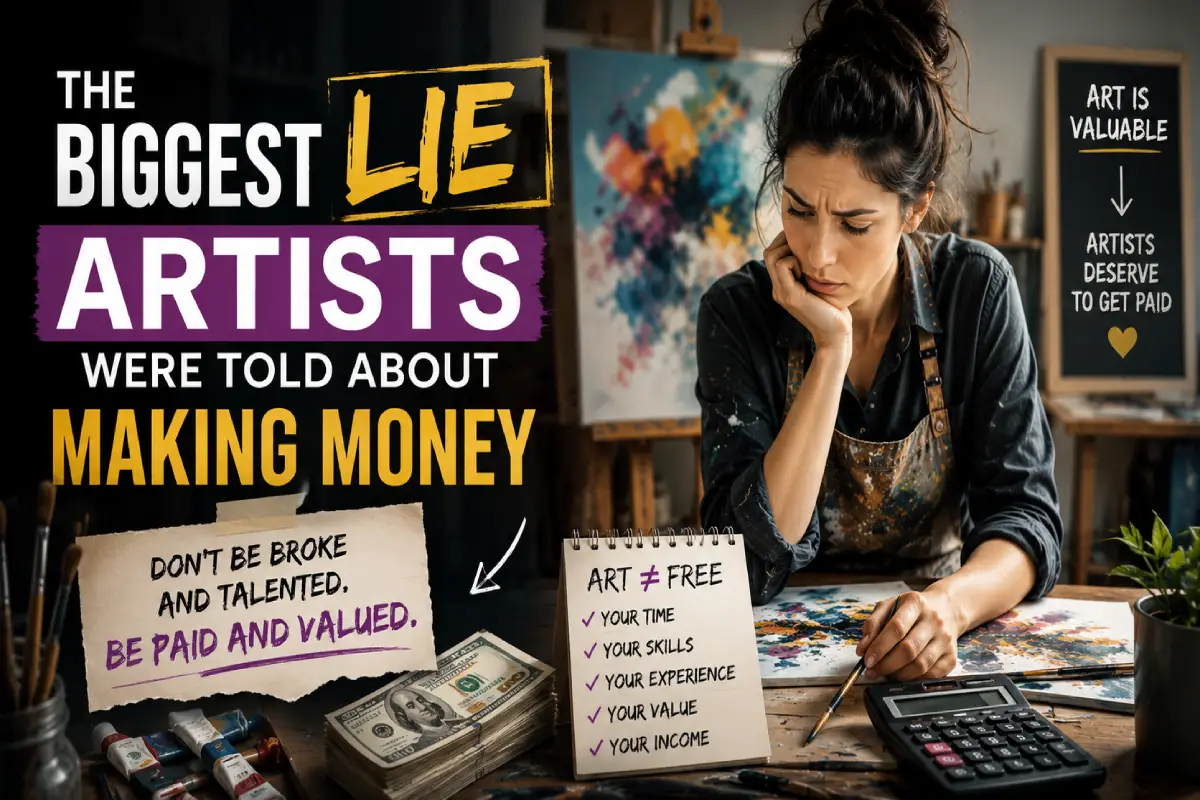
“Real artists don’t care about money.”
This sentence sounds innocent.
But it has silently damaged the confidence of countless artists for years.
Many creatives grow up believing:
- passion and money cannot coexist,
- selling reduces artistic purity,
- and financial ambition makes an artist “less authentic.”
As a result, artists begin feeling guilty for wanting stability.
That guilt becomes dangerous.
Because eventually:
- the artist becomes exhausted,
- unsupported,
- financially dependent,
- and emotionally frustrated.
Then society says:
“See? Art has no future.”
But the real issue was never art itself.
The real issue was the mindset around money.
The Conditioning Starts Early
In many Indian households, creative careers are treated differently from traditional careers.
If someone says:
“I want to become a doctor,”
people respond with encouragement.
But if someone says:
“I want to build an art business,”
the reactions often become:
- “Keep it as a hobby.”
- “What is your backup plan?”
- “Can you really earn from this?”
- “Art is risky.”
Over time, artists internalize these fears.
So even when opportunities appear, they hesitate.
Artists Begin Feeling Guilty About Charging
One of the biggest emotional blocks artists face is pricing.
For example, a Kerala mural artist may spend:
- 20 hours on detailed handmade work,
…and still hesitate to charge ₹5,000.
Why?
Because emotionally, many artists feel:
- “What if they think it’s too expensive?”
- “What if nobody buys?”
- “Maybe my work isn’t valuable enough.”
This creates a cycle:
- underpricing,
- overworking,
- burnout,
- resentment,
- and loss of confidence.
Eventually the artist begins associating creativity with stress.
Money Is Not the Enemy
This is important to understand deeply.
Money does not destroy creativity.
Financial stress does.
When artists constantly worry about:
- bills,
- approval,
- survival,
- or dependence,
their creativity suffers.
Stability actually creates freedom.
A financially supported artist can:
- experiment more,
- create better,
- invest in learning,
- buy quality materials,
- and think long-term.
A Realistic Example
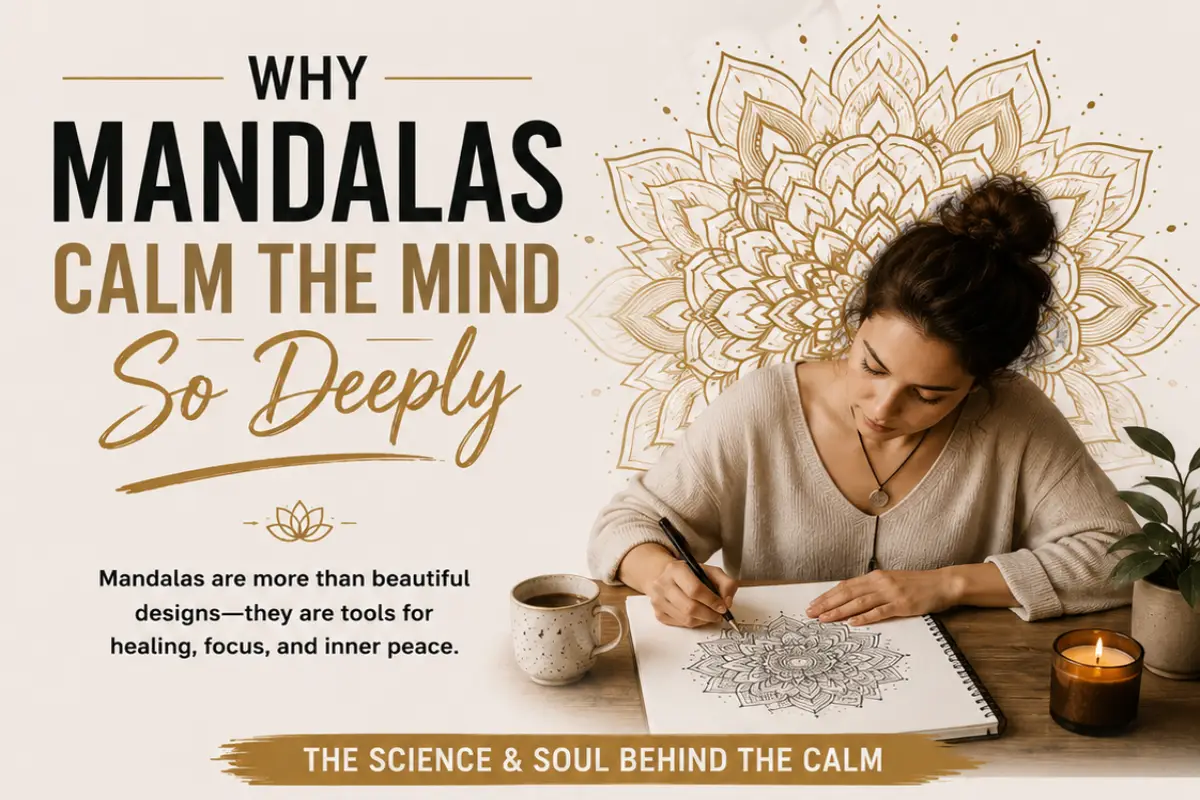
Anita from Hyderabad started teaching dot mandala workshops from home.
Initially she charged extremely low fees because she feared people would not join otherwise.
Her classes filled quickly.
But after expenses and effort, she earned very little.
Worse, she felt exhausted.
Eventually she realized:
- students valued her patience,
- structure,
- guidance,
- and emotional encouragement,
—not just the artwork.
So she slowly increased her pricing.
Not dramatically.
Not aggressively.
Just respectfully.
Surprisingly, serious students still joined.
Because people are willing to pay when they see value clearly.
Artists Confuse Selling With Manipulation
This is another harmful belief.
Selling does not mean:
- forcing,
- convincing,
- or manipulating.
Healthy selling simply means:
helping the right people understand the value of your work.
If your art:
- inspires,
- heals,
- beautifies spaces,
- teaches skills,
- or emotionally impacts people,
then charging for it is not wrong.
It is fair.
The Rise of the Modern Artist
Today’s successful artists are not only painters.
They are also:
- storytellers,
- educators,
- content creators,
- community builders,
- and personal brands.
This shift has changed everything.
An artist in Jaipur can now:
A mandala artist in Chennai can:
- sell workshops internationally.
A homemaker in Kochi can:
- build an Instagram business from home.
The opportunities are real.
But many artists still emotionally hold themselves back because of outdated beliefs about money.
The Emotional Cost of Staying Small
Many artists believe staying underpriced makes them humble.
But constantly shrinking yourself has consequences.
Eventually:
- confidence decreases,
- motivation drops,
- and creativity becomes emotionally heavy.
Artists deserve:
- respect,
- recognition,
- and compensation.
Not guilt.
The Truth Artists Need to Accept
Wanting financial success does not make you less creative.
It does not reduce your artistic integrity.
And it certainly does not make your passion fake.
Artists are allowed to:
- earn well,
- build businesses,
- grow audiences,
- and create wealth.
Because when artists thrive financially:
- they continue creating,
- teaching,
- inspiring,
- and impacting others.
And that matters deeply.
The biggest lie artists were told is this:
“Money and creativity cannot coexist.”
They absolutely can. But artists must stop apologizing for wanting both.