Most artists believe their biggest problem is:
- lack of followers,
- lack of sales,
- lack of opportunities,
- or lack of support.
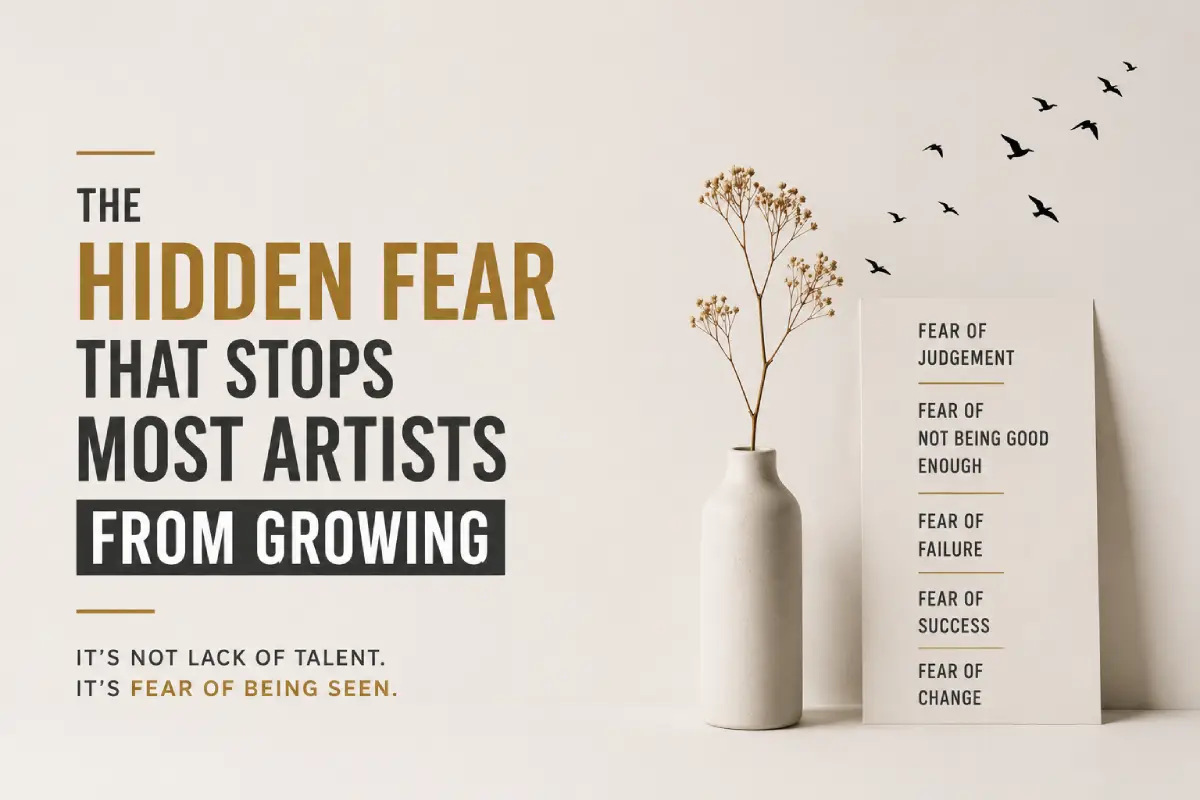
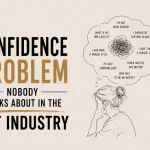
But underneath all these struggles, there is usually a much deeper issue quietly controlling their growth.
Fear.
Not ordinary fear.
The fear of being seen.
This fear affects far more artists than people realize.
And the difficult part is:
many creatives do not even recognize it consciously.
It hides behind excuses like:
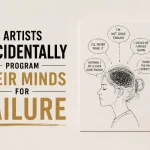
- “I’m not ready yet.”
- “I need to improve first.”
- “I’m waiting for better equipment.”
- “I don’t know what to post.”
- “Maybe later.”
But often, the real emotional truth is:
“What if people judge me?”
Visibility Feels Emotionally Unsafe for Many Artists
Artists are emotionally expressive people.
They create from:
- emotions,
- memories,
- imagination,
- vulnerability,
- and personal experiences.
Which means sharing art publicly can feel deeply personal.
When an artist posts online, it is not just content.
It can feel like:
- exposing identity,
- seeking approval,
- or risking rejection.
That emotional intensity creates fear.
Especially in today’s social media environment where:
- comparison is constant,
- criticism is public,
- and validation feels addictive.
A Common Example Many Indian Artists Relate To
Take the example of Kavya from Bangalore.
Kavya creates beautiful mandala artwork.
Her detailing is excellent.
But for almost three years:
- she avoided showing her face,
- rarely spoke on stories,
- and hesitated to post reels.
Whenever she planned to create content, thoughts appeared:
- “What if people laugh?”
- “What if my relatives judge me?”
- “What if nobody watches?”
- “What if I sound awkward?”
So she kept postponing visibility.
Meanwhile, she watched other artists grow online.
This made her feel:
- frustrated,
- left behind,
- and emotionally stuck.
Eventually she realized:
her real problem was not lack of skill.
It was fear of exposure.
Why Artists Often Fear Success Too
This may sound surprising, but many artists are not only afraid of failure.
They are also afraid of success.
Because success creates:
- visibility,
- expectations,
- responsibility,
- and attention.
Some artists subconsciously fear:
- criticism,
- jealousy,
- online attention,
- or becoming too visible.
So without realizing it, they self-sabotage.
For example:
- delaying launches,
- overthinking captions,
- constantly restarting,
- deleting content,
- or avoiding consistency.
Perfectionism Is Often Fear in Disguise
Many artists proudly say:
“I’m a perfectionist.”
But emotionally, perfectionism is often:
- fear of judgment,
- fear of mistakes,
- or fear of rejection.
The artist keeps thinking:
- “I’ll post when it’s perfect.”
- “I’ll start when I improve.”
- “I need better content.”
But perfection keeps moving further away.
As a result:
- months pass,
- opportunities disappear,
- and confidence decreases.
The Comparison Trap
Social media has intensified artistic comparison dramatically.
An artist may open Instagram for inspiration…
…and within minutes feel:
- inadequate,
- untalented,
- invisible,
- or unsuccessful.
This happens because artists compare:
- their beginning,
with
- someone else’s peak.
For example:
A beginner artist from Pune may compare herself to:
- creators with teams,
- years of experience,
- professional setups,
- and massive audiences.
Naturally, confidence drops.
But comparison rarely shows reality.
People usually post:
- highlights,
- achievements,
- and polished results.
Not:
- burnout,
- anxiety,
- financial struggles,
- or self-doubt.
Another Realistic Example
Neha from Hyderabad loved embroidery art.
Her work received appreciation offline.
But online, she constantly compared herself to large creators.
Eventually she stopped posting consistently because she believed:
“I’m too small. Nobody will care.”
Months passed without growth.
Then she made one simple shift.
Instead of trying to compete visually with huge creators, she focused on:
- authenticity,
- beginner education,
- and relatable storytelling.
Her audience slowly began growing.
Not because she became perfect.
Because she became emotionally honest.
Why External Validation Becomes Dangerous
Many artists unknowingly tie self-worth to:
- likes,
- comments,
- followers,
- and engagement.
When numbers rise:
When engagement drops:
This creates emotional instability.
Because self-worth becomes dependent on algorithms.
Artists must understand:
low engagement does not automatically mean low value.
Sometimes:
- content needs better strategy,
- consistency needs time,
- or audiences need emotional connection.
Fear Keeps Artists Invisible
Many talented artists stay hidden for years because fear convinces them:
- they are not enough,
- not ready,
- or not capable.
But confidence is not built by hiding.
It is built through repeated visibility.
The first reel may feel awkward.
The first workshop may feel scary.
The first pricing conversation may feel uncomfortable.
That is normal.
Growth often feels emotionally uncomfortable before it feels empowering.
The Importance of Emotional Resilience
Artists need more than creative skill today.
They also need:
- emotional resilience,
- self-belief,
- visibility confidence,
- and mental stability.
Because building a creative business involves:
- uncertainty,
- rejection,
- experimentation,
- and public exposure.
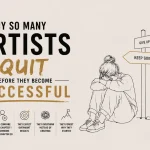
Without emotional strength, many artists quit too early.
Practical Shifts Artists Need
1. Stop Waiting to Feel Fully Ready
Most successful creators started before feeling confident.
2. Focus on Progress, Not Perfection
Perfection delays growth.
3. Reduce Comparison
Use inspiration carefully without attacking your own confidence.
4. Separate Self-Worth From Metrics
Your value is bigger than numbers online.
5. Practice Visibility Gradually
Confidence grows through repetition.
The Truth Most Artists Need to Hear
You do not need to become fearless to grow.
You simply need to stop letting fear make every decision.
Because the artists who eventually build:
- strong businesses,
- communities,
- and confidence
are not always the most talented.
Often, they are simply the ones who continued showing up despite fear.
And that changes everything.