
Artists are often told:
“You are so lucky to do something creative.”
And yes, creativity is beautiful.
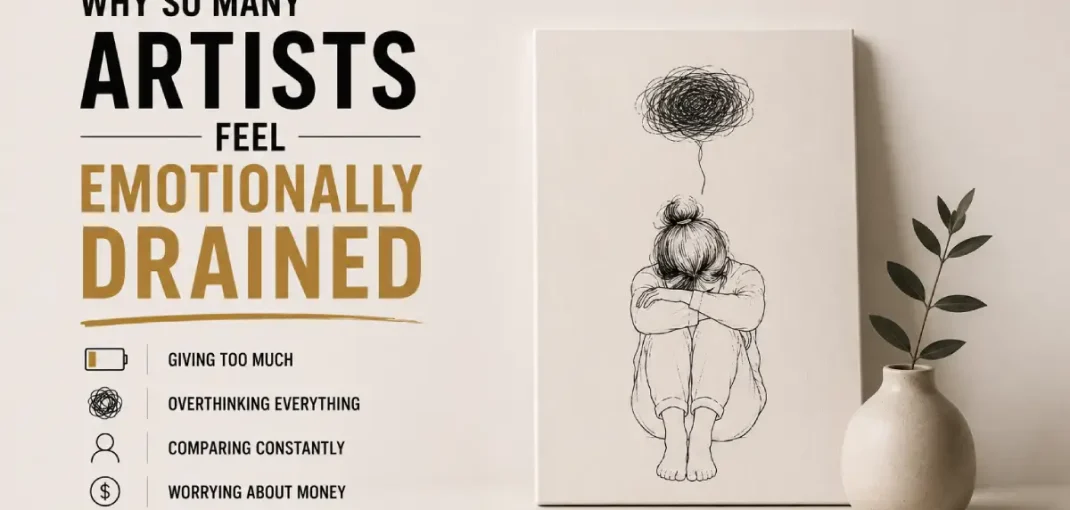
But what most people do not see is the emotional weight many artists silently carry every single day.
Behind:
- the reels,
- the paintings,
- the workshops,
- and the aesthetic posts,
there is often:
- overthinking,
- comparison,
- self-doubt,
- emotional exhaustion,
- and invisible pressure.
Many artists look calm externally…
while internally feeling completely drained.
Artists Feel Deeply
Creative people are usually emotionally sensitive people.
They notice:
- details,
- emotions,
- energy,
- beauty,
- and human experiences deeply.
That sensitivity becomes part of their artistic strength.
But it can also become emotionally overwhelming.
Artists often absorb:
- criticism,
- rejection,
- negativity,
- and comparison
more intensely than others.
A careless comment that someone forgets in two minutes may stay in an artist’s mind for weeks.
Emotional Exhaustion Is Extremely Common in Creative Fields
Many artists experience:
- burnout,
- creative fatigue,
- emotional numbness,
- or lack of motivation,
without understanding why.
This happens because creativity is not only physical work.
It is emotional work too.
Every artwork requires:
- attention,
- emotional presence,
- decision-making,
- and mental energy.
When artists create continuously without emotional recovery, exhaustion builds slowly.
A Realistic Example
Ananya from Bangalore teaches mandala workshops online.
Initially, she loved every part of it:
- teaching,
- creating,
- interacting with students,
- and posting content.
But after a year, she started feeling:
- emotionally tired,
- uninspired,
- and mentally heavy.
Why?
Because behind the scenes she was constantly:
- comparing herself to bigger creators,
- worrying about engagement,
- overthinking every reel,
- responding to messages,
- and trying to stay consistent.
Outwardly, her page looked successful.
Internally, she felt exhausted.
This is more common than people realize.
The Pressure of Social Media
Social media has increased emotional pressure for artists significantly.
Today, artists are expected to:
- create,
- market,
- film,
- edit,
- teach,
- engage,
- and stay visible constantly.
This creates emotional overload.
Especially because many artists already struggle with:
- perfectionism,
- self-worth,
- and fear of judgment.
Comparison Quietly Drains Creativity
One of the biggest emotional drains artists experience is comparison.
An artist may open Instagram for inspiration…
…and leave feeling:
- inadequate,
- invisible,
- or behind.
For example:
A beginner artist from Pune may compare herself to creators with:
- huge audiences,
- professional studios,
- expensive setups,
- and years of experience.
Naturally, confidence decreases.
Over time, comparison creates emotional heaviness.
Why Artists Often Feel Misunderstood
Many artists also feel emotionally lonely.
Especially in environments where:
- creativity is not fully respected,
- family members do not understand artistic careers,
- or financial instability creates pressure.
In many Indian households, artists still hear comments like:
- “When will this become stable?”
- “Can art really become a career?”
- “Why are you spending so much time on this?”
Even when said casually, these comments affect emotional confidence deeply.
Another Example
Megha from Hyderabad loved embroidery art.
But because nobody around her understood creative business, she constantly felt guilty spending time on art.
Whenever she worked on orders, relatives would say:
“You are putting so much effort for such small things?”
Over time, she began doubting herself.
Not because she lacked talent…
but because emotional support was missing.
Perfectionism Creates Mental Exhaustion
Many artists constantly pressure themselves to:
- improve faster,
- create more,
- post consistently,
- and stay perfect.
This creates chronic emotional stress.
The artist stops enjoying creativity…
and starts feeling trapped by expectations.
Ironically:
the more artists emotionally attack themselves,
the harder creativity becomes.
Emotional Healing Is Important for Creative Growth
Many artists try solving burnout by:
- taking breaks,
- buying supplies,
- or forcing motivation.
But often, the deeper issue is emotional exhaustion.
Artists need:
- rest,
- emotional processing,
- nervous system recovery,
- and self-compassion.
Creativity flows best when the mind feels emotionally safe.
Why Healing and Creativity Are Connected
Art is deeply connected to emotions.
Which means:
unprocessed emotions affect creativity heavily.
For example:
- fear affects visibility,
- insecurity affects confidence,
- emotional overwhelm affects consistency,
- and burnout affects inspiration.
Healing emotionally often improves creativity naturally.
The Importance of Slowing Down
Many artists feel guilty resting.
They think:
- “I should be more productive.”
- “Others are posting more.”
- “I’m falling behind.”
But constant emotional pressure damages creativity long-term.
Rest is not laziness.
Rest protects creative energy.
What Artists Need to Start Practicing
1. Reduce Constant Comparison
Comparison without perspective damages emotional health.
2. Allow Imperfection
Not every artwork needs to be flawless.
3. Separate Self-Worth From Social Media
Engagement is not identity.
4. Rest Without Guilt
Creative energy needs recovery.
5. Create for Joy Sometimes
Not everything must become content or income.
The Truth Many Artists Need to Hear
Feeling emotionally drained does not mean:
- you are weak,
- untalented,
- or failing.
It often means:
you have been carrying too much emotional pressure for too long.
Artists give emotional energy constantly:
- through creativity,
- teaching,
- visibility,
- and expression.
That energy must also be replenished.
Because sustainable creativity is not built through constant pressure.
It is built through emotional balance, self-awareness, and inner stability.
And when artists learn to protect their emotional health…
their creativity becomes stronger, calmer, and more meaningful.


