
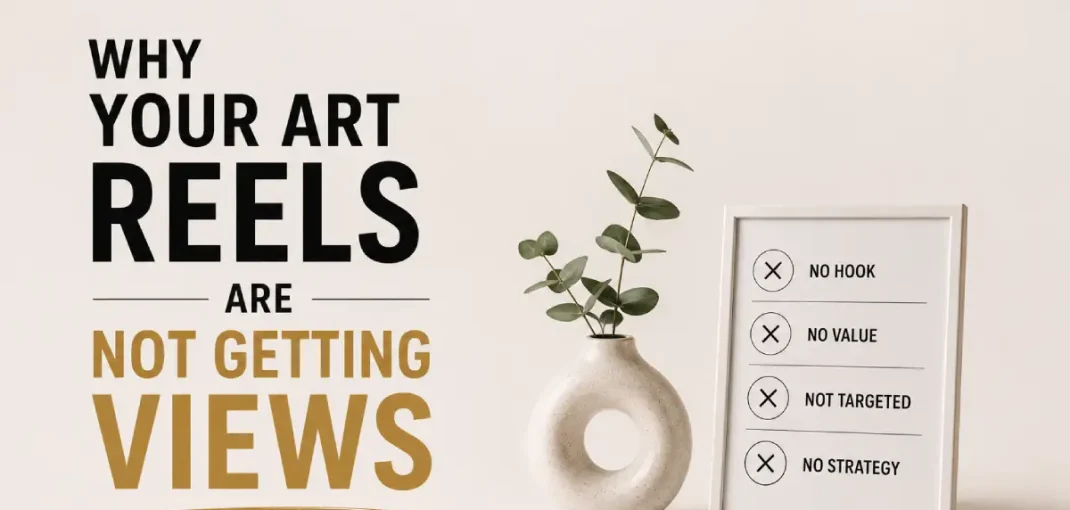
One of the biggest frustrations artists face today is this:
You spend:
- hours creating artwork,
- carefully filming the process,
- editing transitions,
- choosing music,
- writing captions…
…and Instagram gives you:
312 views.
Sometimes even less.
Meanwhile, another random reel gets thousands of views overnight.
Naturally, artists begin thinking:
- “The algorithm hates me.”
- “Instagram only pushes influencers.”
- “Maybe art content is dead.”
But in most cases, the issue is not the algorithm.
It is audience psychology.
Most Art Reels Fail in the First 3 Seconds
This is the truth many creators ignore.
People scroll extremely fast today.
If your reel does not immediately create:
- curiosity,
- emotion,
- surprise,
- or relatability,
people leave.
This does not mean your artwork is bad.
It simply means:
the opening did not emotionally hook attention.
A Common Mistake Artists Make
Many artists start reels like this:
- slow painting clips,
- aesthetic music,
- generic angles,
- no hook,
- no context.
Beautiful? Yes.
Attention-grabbing? Not always.
Remember:
people online are not emotionally invested in your artwork yet.
You must first make them curious enough to stop scrolling.
A Realistic Example
Acrylic artist Harini from Bangalore posted beautiful process reels consistently for months.
Most reels stayed below 500 views.
Then she changed one thing.
Instead of starting with:
- painting footage,
she started with emotionally relatable hooks like:
- “POV: You’re an artist who overthinks every brushstroke.”
- “This painting almost got destroyed halfway.”
- “Nobody talks about how lonely being an artist can feel.”
Suddenly:
- retention increased,
- comments increased,
- and reels reached wider audiences.
Why?
Because people emotionally connected before seeing the artwork.
Art Alone Is Not Enough for Social Media
This is difficult for many artists to accept.
Instagram is not only rewarding skill anymore.
It rewards:
- attention,
- engagement,
- relatability,
- and emotional response.
Which means creators must learn:
- communication,
- storytelling,
- and content psychology.
That does not mean becoming fake.
It means becoming understandable.
The Importance of Hooks
Hooks are the first few seconds or first sentence that make people stop scrolling.
Without a strong hook, even great content gets ignored.
Good hooks usually trigger:
- curiosity,
- emotion,
- tension,
- surprise,
- or relatability.
For example:
Instead of:
“New mandala artwork”
Try:
“This mandala took me 16 hours because I almost gave up halfway.”
The second creates emotional tension.
Another Mistake: Reels With No Human Presence
Many artists hide completely behind their artwork.
No face.
No voice.
No personality.
But social media is built around human connection.
People remember creators who feel relatable.
Even simple clips like:
- speaking casually,
- showing workspace struggles,
- discussing mistakes,
- or sharing creative thoughts
often perform better than overly polished silent reels.
A Common Indian Creator Pattern
Many artists in India hesitate to show themselves online because of:
- shyness,
- fear of judgment,
- family opinions,
- or insecurity.
For example:
Priya from Hyderabad avoided speaking on camera for almost a year.
She believed:
“People only care about the artwork.”
But once she began:
- sharing voiceovers,
- talking about beginner struggles,
- and explaining color choices,
her audience engagement improved significantly.
Because audiences connected with her, not just the paintings.
Why Retention Matters More Than Likes
Instagram pushes content when people:
- watch longer,
- replay,
- comment,
- or save.
Which means:
keeping attention matters more than simply posting.
This is why:
- storytelling,
- curiosity,
- transitions,
- pacing,
- and emotional hooks
matter heavily.
Educational Content Performs Surprisingly Well
Many artists only post finished art.
But educational content often builds stronger audiences.
For example:
- “3 mistakes beginner artists make”
- “How I stopped ruining my mandala symmetry”
- “Things nobody tells artists about pricing”
- “What I wish I knew before starting art business”
These create value.
Value builds trust.
Perfection Is Not Always the Answer
Ironically, extremely polished content sometimes performs worse than authentic content.
Why?
Because perfection can feel emotionally distant.
People connect more with:
- honesty,
- imperfection,
- struggle,
- process,
- and personality.
This is why:
- behind-the-scenes clips,
- messy desks,
- mistakes,
- and learning moments
often create stronger engagement.
Another Example
An embroidery artist from Kochi spent hours making highly edited cinematic reels.
They looked beautiful…
but performed poorly.
Eventually she posted a simple talking reel:
“I cried after ruining this embroidery piece.”
That reel emotionally resonated with artists.
Why?
Because it felt real.
Why Artists Need a Content Strategy
Posting random reels daily creates burnout.
Instead, artists should balance:
- emotional content,
- educational content,
- storytelling,
- authority content,
- process videos,
- and relatable experiences.
This creates depth.
Artists Must Stop Chasing Only Virality
Viral views without connection rarely create business growth.
A smaller audience that:
- trusts you,
- remembers you,
- and values your work
is far more powerful than random viral reach.
The Biggest Shift Artists Need
Artists must stop thinking:
“I just need better artwork.”
And start understanding:
“I need better communication.”
Because social media growth today depends heavily on:
- emotional connection,
- audience psychology,
- storytelling,
- and visibility.
Your reels are not failing because you are untalented.
Most likely:
people simply do not yet feel emotionally connected enough to stop scrolling.
And once artists understand that…
their content strategy changes completely.


