One of the biggest emotional struggles artists face is not creativity.
It is selling.
Many artists can:
- spend 20 hours creating a beautiful artwork,
- pour emotions into every detail,
- and work with complete dedication…
…but the moment they need to say the price aloud, discomfort appears immediately.
Thoughts like:
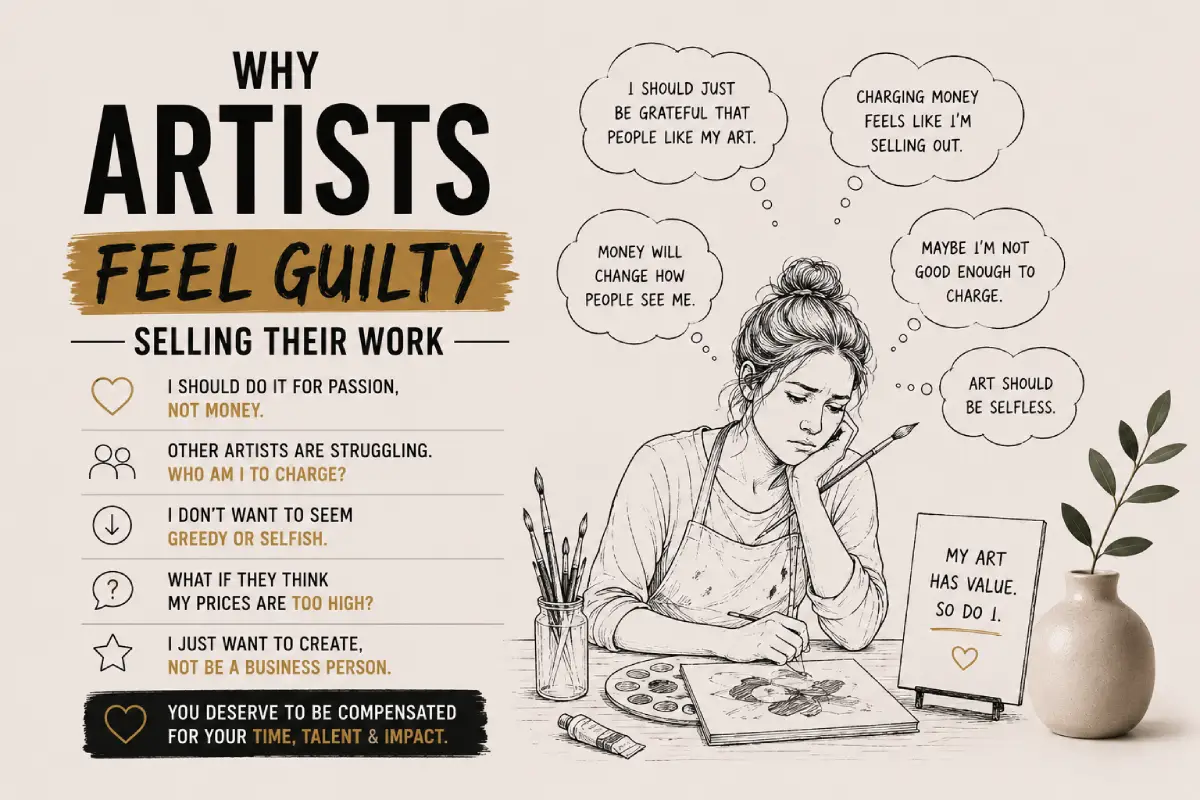
- “What if they think it’s too expensive?”
- “What if they judge me?”
- “I feel awkward charging.”
- “Maybe I should reduce the price.”
start taking over.
This emotional guilt affects thousands of artists quietly.
Especially in India, where many creatives are emotionally conditioned to believe:
“Art should come from passion, not money.”
But this belief often creates burnout instead of freedom.
Why So Many Artists Feel Uncomfortable Charging
Artists are emotionally connected to their work.
Unlike mass-produced products, handmade art carries:
- time,
- attention,
- emotion,
- energy,
- and personal expression.
Because of this emotional attachment, selling can feel vulnerable.
It may feel like:
- asking for validation,
- exposing self-worth,
- or risking rejection.
That emotional intensity makes pricing difficult.
The Conditioning Starts Early
Many artists grow up hearing things like:
- “Art is just a hobby.”
- “Creative work should be done from the heart.”
- “Don’t think too much about money.”
- “Artists should stay humble.”
Over time, these messages create subconscious guilt around earning.
So when artists finally try building businesses, an internal conflict appears.
Part of them wants:
- growth,
- income,
- recognition,
- and independence.
Another part feels:
- guilty,
- uncomfortable,
- or undeserving.
A Realistic Example
Madhavi from Hyderabad creates beautiful embroidery hoops.
Customers regularly appreciated her work.
But every time someone asked:
“What’s the price?”
she immediately became nervous.
Even though:
- the embroidery took hours,
- materials were expensive,
- and detailing required skill,
she constantly undercharged.
Why?
Because internally she feared:
- losing customers,
- sounding greedy,
- or appearing “too money-minded.”
Eventually she became:
- exhausted,
- financially frustrated,
- and emotionally drained.
The problem was not lack of talent.
It was guilt around receiving money.
Artists Often Confuse Selling With Manipulation
This is one of the biggest mindset problems creatives face.
Many artists subconsciously believe:
“Selling means forcing people.”
Not true.
Healthy selling simply means:
- communicating value,
- helping the right people understand your work,
- and making it easy to buy.
If your art:
- inspires,
- heals,
- beautifies spaces,
- teaches skills,
- or emotionally impacts people,
then charging fairly is not wrong.
It is respectful.
Why Underpricing Creates Long-Term Damage
Initially, underpricing may feel emotionally safer.
But over time it creates:
- resentment,
- burnout,
- exhaustion,
- and emotional frustration.
Imagine spending:
- 15 hours creating detailed mandala artwork,
and charging so little that:
- materials,
- effort,
- packaging,
- and energy
barely get covered.
Eventually the artist starts feeling:
“Nobody values my work.”
But often, the artist first failed to value it internally.
Another Example
Anjali from Bangalore started online mandala workshops during lockdown.
Initially she charged very low fees because she thought:
“People won’t pay more for art classes.”
Her classes filled quickly.
But financially she still struggled.
Eventually she realized:
students were not only paying for:
- paint,
- dots,
- and patterns.
They were paying for:
- guidance,
- emotional encouragement,
- structure,
- confidence,
- and transformation.
Once she understood this, she increased prices gradually and respectfully.
Surprisingly:
serious students still joined.
Because value was clear.
Selling From Heart Is Different From Aggressive Marketing
Artists do not need to become:
- fake,
- manipulative,
- or overly salesy.
In fact, authentic communication often works better.
Selling from heart means:
- sharing stories honestly,
- explaining meaning behind artwork,
- connecting emotionally,
- and communicating genuinely.
People emotionally connect with sincerity.
Why Emotional Energy Matters in Selling
People can sense emotional discomfort.
If an artist feels:
- ashamed,
- desperate,
- or guilty while selling,
that energy affects communication.
But when artists feel:
- calm,
- confident,
- and aligned with their value,
selling feels natural.
Social Media Has Changed Art Businesses
Today artists are no longer limited to:
- exhibitions,
- galleries,
- or local circles.
An artist from Kochi can:
- teach workshops globally.
A homemaker from Chennai can:
- build a handmade brand online.
A mandala artist from Pune can:
- create digital products and memberships.
The opportunities are real.
But emotional guilt around money still blocks many talented creatives.
Artists Must Stop Romanticizing Struggle
Many people glorify:
- starving artists,
- suffering creatives,
- or financial sacrifice.
But long-term struggle damages creativity.
Artists deserve:
- stability,
- respect,
- recognition,
- and sustainable income.
There is nothing noble about constant exhaustion.
What Artists Need to Start Practicing
1. Stop Apologizing for Pricing
Your work has value.
2. Understand Emotional Value
People buy meaning, not just materials.
3. Separate Selling From Manipulation
Authentic communication matters.
4. Build Self-Worth Internally
Confidence affects pricing deeply.
5. Allow Yourself to Receive
Receiving money does not reduce artistic purity.
The Truth Most Artists Need to Hear
You can create from the heart…
and still earn well.
Those two things are not opposites.
Artists do not need to choose between:
- creativity
and
- financial success.
Both can coexist beautifully.
Because when artists are financially supported:
- they create more,
- teach more,
- inspire more,
- and impact more lives.
And that is something worth building confidently.